
Be patient in the rainy seasons
2 Corinthians 7:11: “See what this godly sorrow has produced in you…”
A Time of Growth is Coming
The Sonoran Desert is a vast, 100,000 square mile subtropical desert stretching across parts of Arizona, California, and Mexico. Known as the wettest desert in North America, it features a unique bi-seasonal rainfall pattern, mild winters, and intensely hot summers. It is also home to incredible biodiversity, including the iconic saguaro cactus.
On a recent trip out west, I had the opportunity to visit the Saguaro National Park. To put it simply, I was fascinated.
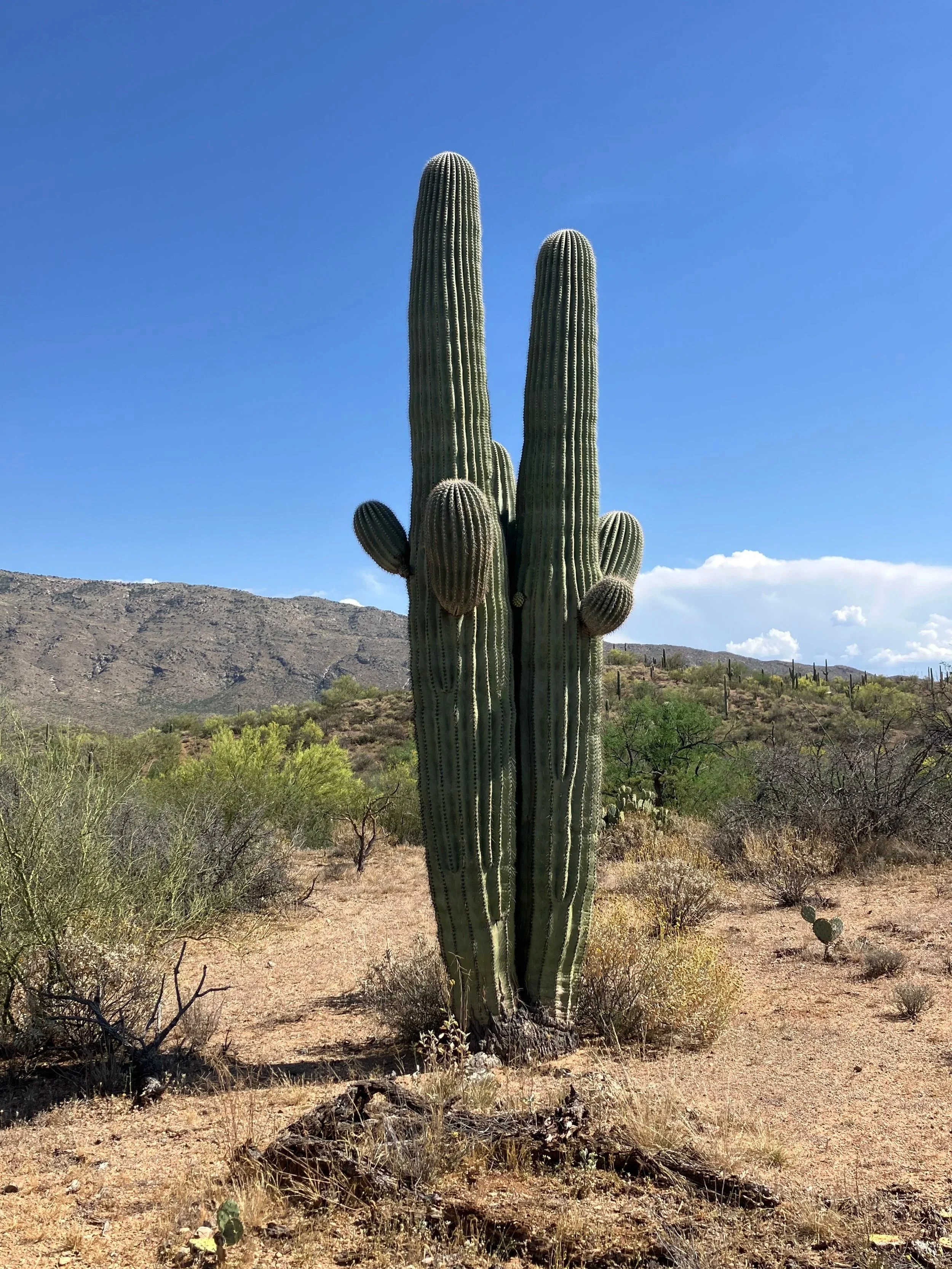
What struck me first was that no two saguaros are alike. As we drove through the desert, I found myself looking from side to side in awe, not wanting to miss any of them. Some saguaros stood tall and simple with a single column reaching toward the sky. Others had multiple arms stretching outward and upward. Still others appeared like small bulbs, just beginning to emerge from the ground.
Each one was unique—shaped by its environment, its timing, and its seasons.
That uniqueness is made possible by the desert itself. The lush plant life of the Sonoran Desert exists because of its distinct climate, subtropical temperatures and two seasons of rainfall. With more than 300 days of sunshine each year, it may seem like a place of constant dryness. But both the mild winters and the blazing summers bring life-giving rain.
These rhythms—sun and rain, drought and downpour—are essential.
Desert plants, including the saguaro, are designed to endure extreme conditions. They are built to withstand long seasons of dryness, but they also rely on the rain to grow and thrive.
Isn’t it interesting how similar that is to our own lives?
We, too, experience seasons of drought and seasons of heavy rain. There are times when life feels steady and bright, and other times when the storms come suddenly, leaving us overwhelmed and unsure how to move forward.
This experience reminded me of the Old Testament prophet Ezra.
Ezra was a priest and scribe, deeply devoted to God’s Word. He was committed to restoring faith and obedience among the people. But his journey was not without difficulty.
When Ezra arrived in Jerusalem, he was devastated to find that the people had turned away from God’s commands. In Ezra 9:3, he writes, “When I heard this, I tore my tunic and cloak, pulled hair from my head and beard, and sat down appalled.”
He didn’t ignore his grief. He didn’t rush past it. He sat in it.
So often, we find ourselves in similar moments—moving forward in obedience, doing what we believe God has called us to do, and then suddenly, the rain begins to fall. Sometimes it’s because of our own choices, and other times it’s the result of circumstances beyond our control. Either way, we can feel halted by the weight of it all.
We may be tempted to either react in frustration or push past our pain too quickly. But there is something important we can learn here.
Growth often happens in the very seasons we try to avoid.
If we’re honest, most of us would choose endless sunny days over stormy ones. We don’t like the discomfort of the “rainy seasons”—the struggles, disappointments, and hardships that demand our attention. Yet, as author John Green once said, “That’s the thing about pain. It demands to be felt.”
And he’s right.
Pain, when brought before God, has a purpose.
Ezra shows us what that looks like. He didn’t lash out at others, and he didn’t pretend everything was fine. He allowed himself to feel deeply, to sit in the weight of the moment, and to bring it honestly before God.
Sometimes, we need to do the same—to pause, to process, and to sit with God in the middle of our circumstances.
In 2 Corinthians 7:11, we read: “See what this godly sorrow has produced in you…”. Even sorrow, when surrendered to God, produces something meaningful.
And this brings us back to the saguaro. Most of its growth happens during the summer rainy season.
In fact, the more the saguaro grows, the more arms it develops—and the more arms it has, the more fruit it can produce.
In other words, the very seasons that seem the most difficult are often the ones that produce the most growth. So don’t be afraid of the rainy seasons but embrace the opportunity to draw closer to God and allow Him to use this season to grow and strengthen you to bear fruit in ways that only the rain can produce.
